
The Motu Platform
Software up front.Real operators behind it.
Motu is a software-enabled agency. The platform gives you a live view of your brand, and our team runs the growth system it reflects.
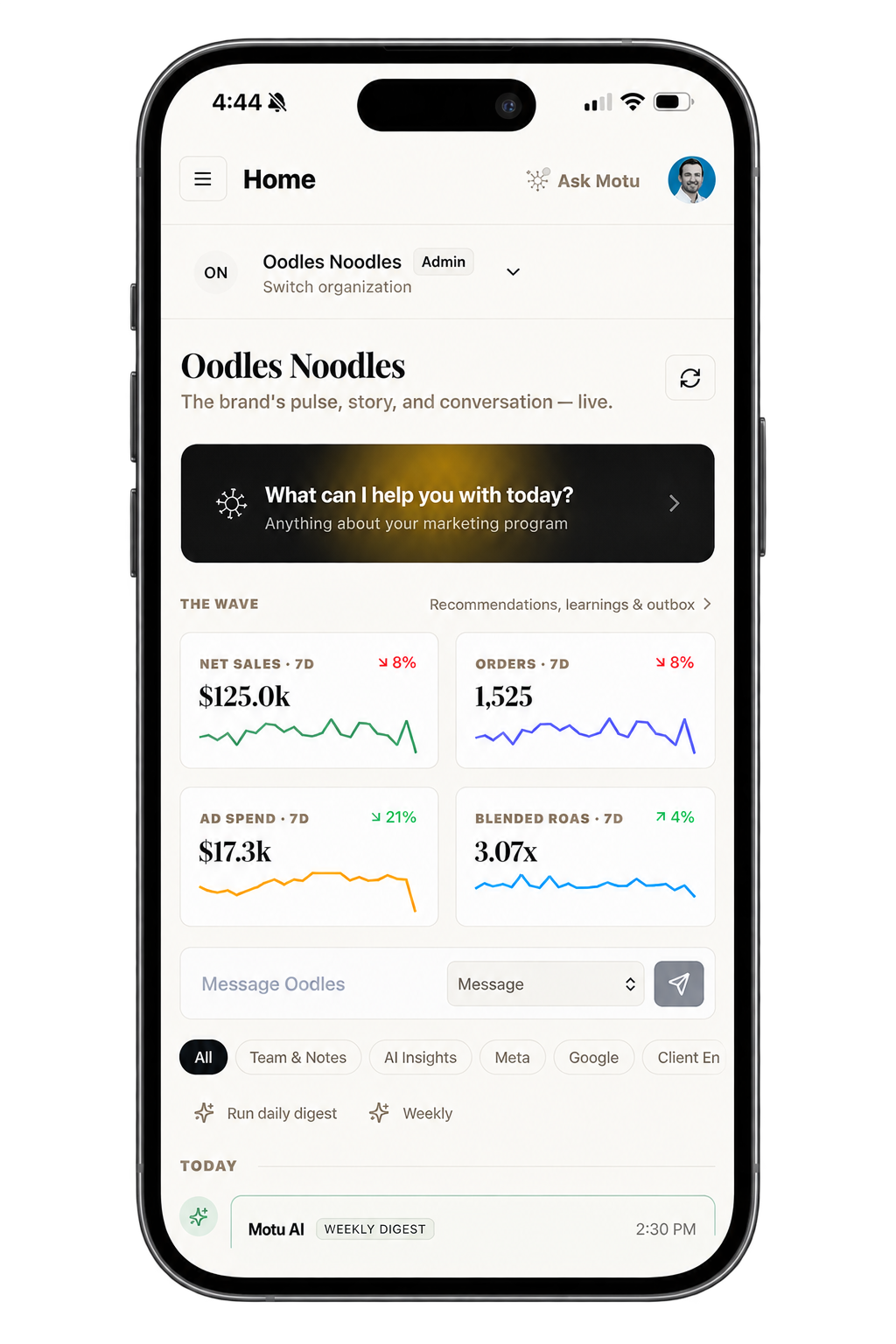
Your brand's pulse, story, and conversation, live
Strategy first
Every engagement starts by defining brand and go-to-market strategy tailored to your business. That strategy steers everything the system does.
Live analytics
Real-time analytics and reporting in one place, so you can see opportunities, changes, and impacts as they happen, not at month end.
AI-enabled execution
The Motu team deploys AI-enabled workflows to execute the strategy, channel by channel: paid media, site, email, and beyond.
Real momentum
Software powers the system, and people run it. Real teams, real accountability, and marketing momentum you can measure.
The Motu Growth System
Growth is a system.We build it and run it.
Most e-commerce growth comes down to two disciplines: paid media that finds profitable customers, and a site that converts them. We run both, on numbers you own, and build the system so it improves over time.
Paid Media Management
Measured on profit, not platform metrics
We manage Meta, Google, TikTok, and wherever else your customers are. Performance is measured against real profit rather than platform-reported ROAS, and testing, budget changes, and scaling decisions happen on a steady weekly rhythm.
- Full-funnel management across Meta, Google, and beyond
- Spend scaled against profit, not just ROAS
- Ongoing creative testing
CRO & Site Performance
Make more of the traffic you have
You already pay for every visit, so the site should do its part. We run structured testing, site speed work, and customer journey fixes that steadily lift conversion rate and average order value.
- A/B testing with proper statistical discipline
- Site speed and Core Web Vitals tuned for mobile
- Landing pages that match the ads that bring people in
Revenue Clarity
One clear view of the numbers
Shopify, payments, ads, and email connected in one place. You can see where growth is coming from and where it's falling short, without stitching spreadsheets together yourself.
- Live sales by channel, campaign, and cohort
- Acquisition cost calculated honestly, not the platform's version
- Attribution that lines up with your P&L
AI Growth Systems
The engine under the hood
AI supports everything above. Reporting, monitoring, and analysis run automatically, and what we learn from each test feeds into the next one. The system gets more useful the longer it runs.
- Automated reporting and insight delivery
- Early alerts when something looks off
- Learnings carried forward from every test
From a recent growth program
Measured results, proven against a holdout
↑0.0%
revenue per visitor
More value from every visit the brand was already paying to bring in.
+0%
average order value
Bigger baskets from better merchandising and offer framing.
+0%
conversion rate
More visitors buying, with every change tested before rollout.
Want the system running on your brand?
Start with an evaluation. Connect your brand and Motu will show you where the growth is.
Brand Partners
Brands we're proud to work with
Premium consumer brands with real craft, from adventure gear to specialty coffee. We run their growth systems and measure ourselves by their results.


DIY truck bumpers built for the bold
Visit MOVE Bumpers →


Bio-engineered pest control, zero neurotoxins
Visit Applied Science Labs →


Large canvas prints of the moments you love
Visit Your Happy Home →


The best pilates gear on the web
Visit Reformer Loops →


Handcrafted flags inspired by golf’s golden age
Visit Hickory Flag Co →


Surf gear for wherever tomorrow takes you
Visit Mañana →


Beautiful coffee machines, designed with intention
Visit Ratio Coffee →


Plant-powered pest control for brighter days
Visit Brightcide →
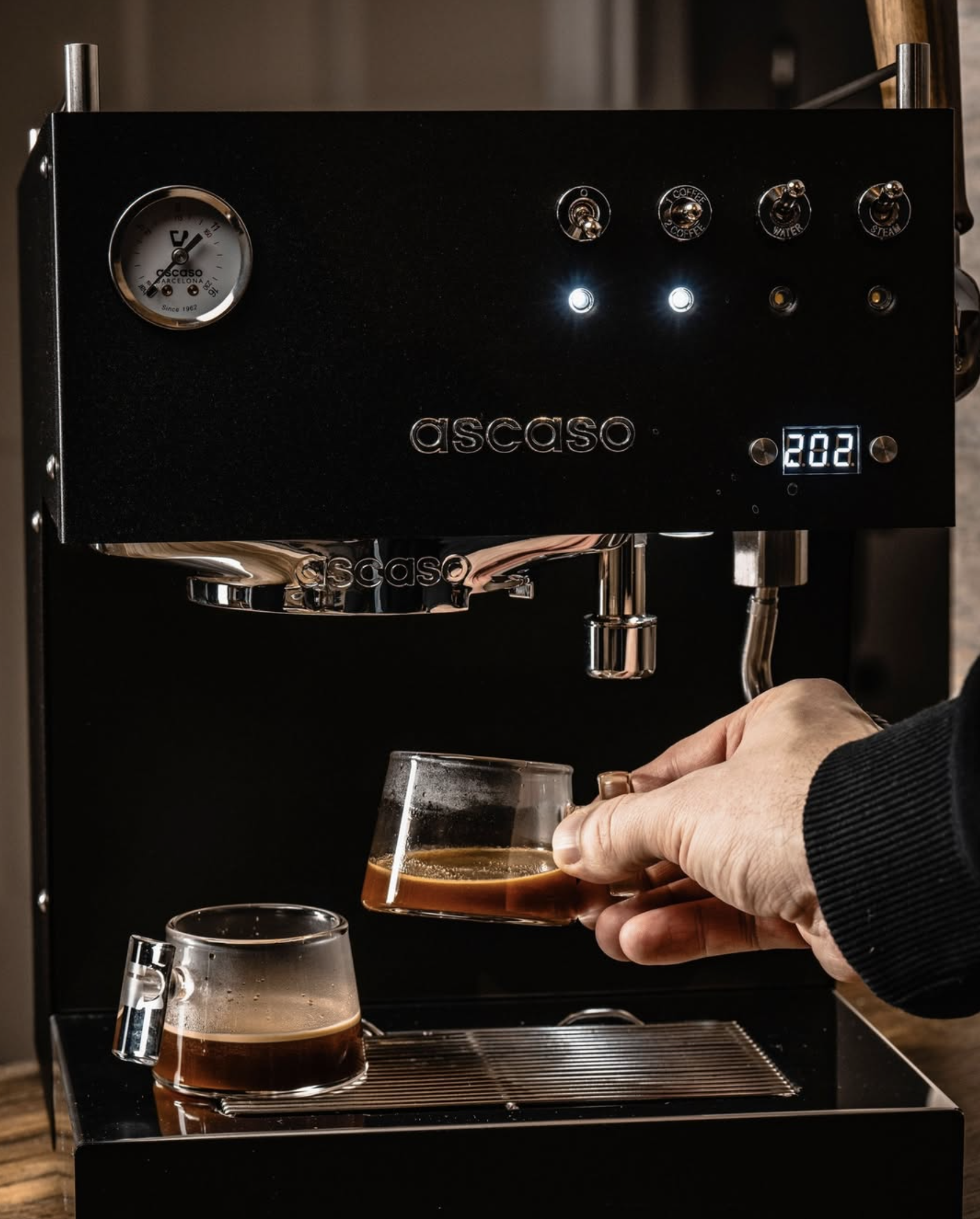

Handcrafted espresso machines from Barcelona since 1962
Visit Ascaso →


Premium LED lighting for trucks, Jeeps & SUVs
Visit North Lights →


Hand-made goods for the home
Visit Hearth Goods →
Our Philosophy
A few core beliefs
What we believe, and what we won't bend on.
Control the inputs, growth follows
We focus effort on what you can control and measure, and we're honest about what you can't.
Rhythm creates momentum
Our systems improve on a regular cadence, so progress carries over instead of resetting each quarter.
Small teams, real leverage
A small team with good tools can cover the work of a much larger one. We build for that.
Learning is never optional
Every system we build learns as it runs. A system that stops learning slowly falls behind.
Metrics must mean something
If we can't tie work to a number, we question whether it's worth doing. Every system reports against a target.
Connected beats clever
Connected data helps more than a clever model. Clarity comes from one source of truth, not more dashboards.
Discipline creates freedom